The Liquidity Penalty: What American Traders Sacrifice for Financial Privacy in Cryptocurrency Markets
Photo: Esto131, CC BY-SA 4.0, via Wikimedia Commons
Market structure is rarely discussed in the same breath as civil liberties. Yet for the segment of the American cryptocurrency market focused on financial privacy, the two are inseparable. The depth of an order book, the width of a bid-ask spread, and the availability of counterparties are not merely technical trading concerns — they are direct expressions of how much the financial system is willing to accommodate assets designed to resist surveillance.
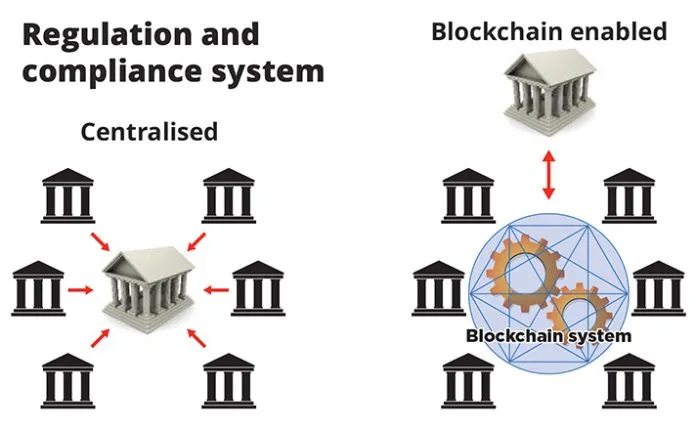
Privacy-focused cryptocurrencies, most notably Monero (XMR) and Zcash (ZEC), have faced accelerating delistings from major regulated exchanges over the past three years. Kraken removed Monero from its US platform in 2024. Binance.US, Gemini, and Coinbase have never listed it. The pattern is not coincidental — it reflects the compliance calculus of institutions operating under the Bank Secrecy Act and FinCEN guidance, for whom assets with opaque transaction graphs create unacceptable regulatory exposure.
The result is a bifurcated market: transparent assets trade on deep, regulated venues with institutional-grade infrastructure, while privacy assets are routed to a fragmented ecosystem of decentralized platforms, peer-to-peer networks, and atomic swap protocols. Each of these alternatives carries real economic costs that are often underappreciated by users who frame privacy purely as a philosophical choice.
Understanding Liquidity and Why It Matters
Liquidity, in its most practical definition, is the ability to execute a trade at or near the expected price without materially moving the market. It is a function of order book depth — the volume of resting buy and sell orders at various price levels — and the number of active counterparties willing to transact at any given moment.
For assets with deep liquidity, a user executing a $50,000 trade on a major exchange might experience slippage of a fraction of a percent. For assets with thin liquidity, the same trade size might move the market by several percentage points, with the trader bearing that cost entirely. In practical terms, this means that accessing privacy-preserving assets at scale is inherently more expensive than accessing transparent assets — a structural penalty that compounds with transaction size.
Price discovery — the process by which a market arrives at a consensus price — is also degraded in fragmented, low-liquidity environments. When trading activity for a given asset is dispersed across dozens of small venues with limited inter-market arbitrage, the prices observed on different platforms may diverge significantly. A trader relying on a quoted price from one source may find execution at a materially different level on the platform where they actually transact.
Decentralized Exchanges: Automation Without Depth
Automated market maker (AMM) protocols on decentralized exchanges represent the most accessible privacy-adjacent trading venue for many American users. Platforms such as Uniswap and its derivatives allow permissionless token swaps without identity verification, and wrapped or bridged representations of some privacy assets are available on EVM-compatible chains.
However, AMM-based trading introduces its own structural inefficiencies. Liquidity in AMM pools is provided by independent participants who deposit asset pairs in exchange for fee revenue. For privacy-focused assets, the pool sizes are typically small relative to demand, resulting in pronounced price impact on even moderate trades. The constant product formula underlying most AMMs — which determines price as a function of the ratio of assets in a pool — means that slippage scales nonlinearly with trade size. A trader swapping $5,000 worth of a thinly pooled privacy asset may experience acceptable slippage; the same trader executing $50,000 may find the effective price significantly worse than any quoted rate.
Additionally, many DEX interfaces accessible to US users have implemented geographic restrictions or token-level restrictions in response to regulatory pressure. The OFAC sanctioning of Tornado Cash demonstrated that smart contract addresses themselves can become compliance targets, and DEX operators have responded by restricting access to assets and protocols deemed high-risk.
Peer-to-Peer Markets: Counterparty Risk and Premium Pricing
Peer-to-peer trading platforms — most prominently LocalMonero (now defunct following its voluntary shutdown in 2024) and its successors — have historically served as a primary venue for privacy coin transactions outside the regulated exchange ecosystem. The P2P model allows buyers and sellers to negotiate directly, with the platform serving only as an escrow intermediary.
The tradeoffs are significant. On the positive side, P2P markets are genuinely permissionless in their operation; a US user can transact without the KYC requirements that govern centralized exchanges. On the negative side, P2P markets carry material counterparty risk, require active negotiation rather than passive order matching, and typically price privacy assets at a premium to compensate sellers for the inconvenience and risk of operating outside regulated infrastructure.
That premium — often ranging from two to ten percent above spot price, depending on payment method and market conditions — is a direct measure of the liquidity penalty imposed by regulatory exclusion. American traders paying this premium for Monero are, in economic terms, paying for privacy in the most literal sense.
The shutdown of LocalMonero in May 2024 illustrated the fragility of P2P infrastructure. Even platforms that operate legally and without facilitating illicit activity face operational pressures that can result in abrupt discontinuation, leaving users without access to previously reliable liquidity sources.
Atomic Swaps: The Technical Frontier
Atomic swap protocols represent the most technically sophisticated approach to privacy-asset acquisition. A cross-chain atomic swap allows two parties to exchange assets on different blockchains simultaneously, with the transaction structured so that either both legs execute or neither does — eliminating counterparty risk without requiring a trusted intermediary.
For Monero specifically, the development of XMR-BTC atomic swaps has created a genuinely trustless pathway for acquiring privacy assets from Bitcoin without routing through a KYC exchange. Tools such as the COMIT network's swap implementation have demonstrated technical viability, and the user experience has improved meaningfully since the initial proof-of-concept releases.
The practical limitations remain substantial. Atomic swaps require technical competence that exceeds the threshold of most retail participants. Swap execution times are measured in minutes to hours rather than seconds. Available liquidity is limited to what individual counterparties are willing to provide, and finding a counterparty for a specific trade size at a specific time requires either patience or participation in a coordination network. For American users accustomed to the execution speed of centralized exchanges, the friction is considerable.
The Regulatory Feedback Loop
The liquidity deficit facing privacy assets is not a static market condition — it is actively shaped by regulatory signals that influence exchange behavior, institutional participation, and developer activity. As US regulators have signaled increasing skepticism toward assets with opaque transaction graphs, exchanges have preemptively delisted rather than risk enforcement action. This reduces liquidity, which reduces price discovery efficiency, which reduces institutional interest, which further reduces liquidity. The feedback loop is self-reinforcing.
For American traders seeking both genuine financial privacy and practical exit strategies, this dynamic creates a genuine strategic tension. The most private assets are accessible only through the least liquid venues, and the friction costs of those venues are real and recurring. The decision to hold and transact in privacy-preserving assets is not merely ideological — it carries measurable economic consequences that compound over time and at scale.
Navigating this tradeoff requires a clear-eyed assessment of both the value of privacy and the cost of accessing it. In a market where surveillance infrastructure and regulatory pressure continue to intensify, that assessment is becoming more — not less — consequential for American participants.