Peer-to-Peer in Name Only: Where Atomic Swap Protocols Fail the Anonymity Standard in 2026
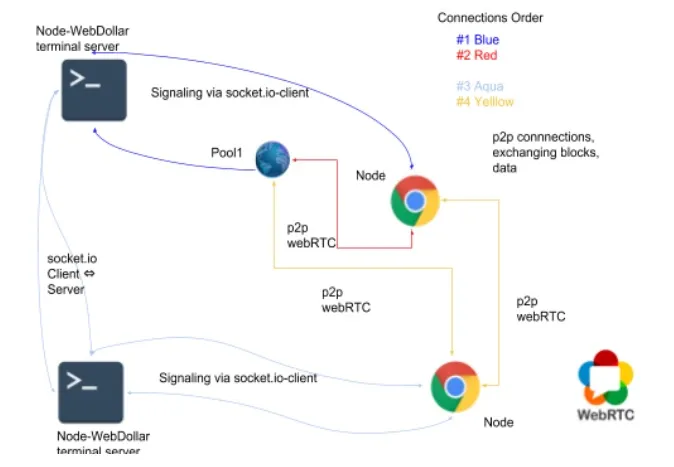
Photo: Alexandru Ionuț Budişteanu, CC BY-SA 4.0, via Wikimedia Commons
The promise of the atomic swap is elegant in its simplicity: two parties exchange assets across different blockchains without a custodian, without an intermediary, and — crucially — without a central point of failure that regulators can target or data brokers can mine. The cryptographic mechanism that makes this possible, the hash time-locked contract, has existed in various forms since at least 2013. Its application to cross-chain trading has been a subject of genuine enthusiasm among privacy-focused developers for nearly as long.
In 2026, however, the distance between that theoretical elegance and operational reality has become impossible to ignore. Atomic swap protocols, as currently implemented across the platforms that serve American traders, introduce surveillance vulnerabilities that their marketing materials consistently understate. Understanding those vulnerabilities — and the regulatory interpretations now forming around them — is essential for any trader who has been led to believe that decentralized peer-to-peer exchange is synonymous with private exchange.
The Hash Time-Locked Contract as a Forensic Artifact
The hash time-locked contract that enables atomic swaps operates by requiring both parties to reveal a cryptographic preimage — a secret value — within a specified time window. If either party fails to act, the funds revert. The mechanism is trustless and elegant. It is also, from a surveillance perspective, a remarkably useful artifact.
Because the hash of the shared secret appears on both blockchains involved in the swap, blockchain analytics software can link the two legs of the transaction even across chains. A swap between Bitcoin and Monero, for example, is often cited as a privacy-preserving technique — the assumption being that Monero's privacy properties obscure the destination of the exchanged funds. What this framing omits is that the Bitcoin-side HTLC, which is fully public, reveals the timing, amount, and counterparty address of the swap initiation. Firms specializing in cross-chain analytics have published research demonstrating that this linkage is recoverable with meaningful reliability, particularly when the swap is conducted between parties whose on-chain histories are already partially identified.
The forensic artifact problem is not theoretical. It is an active area of development for the same analytics firms that contract with the Internal Revenue Service, the Department of Justice, and the Department of Homeland Security's financial investigations units.
Liquidity Discovery and the Counterparty Identification Problem
For an atomic swap to occur, the two parties must find each other. This counterparty discovery process is the second major vulnerability that peer-to-peer trading platforms have not adequately resolved. Platforms that facilitate atomic swaps must provide some mechanism through which potential trading partners can signal their availability, desired assets, and acceptable terms. That mechanism — whether an order book, a peer discovery network, or a liquidity aggregation layer — necessarily creates a record of intent that can be correlated with on-chain execution.
Several platforms operating in this space in 2026 employ peer-to-peer order books that are themselves distributed across nodes. The distribution reduces central points of failure but does not eliminate the metadata generated by participation. A node that consistently posts offers to exchange Bitcoin for privacy-preserving assets at particular times, in particular size ranges, creates a behavioral profile that is distinguishable from background network noise. When that profile is correlated with IP-level data — which peer-to-peer networks inherently expose unless every participant routes through Tor — the counterparty identification problem becomes tractable for a sufficiently resourced investigator.
Smart Contract Interactions and the Ethereum Complication
For atomic swaps executed on or through Ethereum-compatible networks, the smart contract interaction layer introduces additional exposure. Every interaction with a deployed contract is recorded on-chain, including the wallet address initiating the call, the function invoked, the parameters passed, and the block timestamp. When a user interacts with an atomic swap contract, that interaction is associated with their wallet address in the same permanent, public ledger that records all other Ethereum transactions.
The composability that makes Ethereum valuable — the ability for contracts to interact with one another and for users to chain multiple protocol interactions in sequence — also means that the full history of a wallet's DeFi activity is recoverable and analyzable. A trader who uses an atomic swap protocol as one step in a longer sequence of privacy-preserving maneuvers may find that the contract interaction itself anchors their activity to an identifiable address, undermining the privacy work done at other steps in the chain.
The Regulatory Posture Taking Shape in Washington
The legal environment surrounding atomic swap protocols is not yet settled, but the direction of travel in Washington is discernible. The Treasury Department's Office of Foreign Assets Control established a significant precedent with its sanctions actions against Tornado Cash, arguing that a smart contract — an autonomous piece of code with no human operator — could itself constitute a sanctionable entity. Federal courts have reached divergent conclusions on the constitutional dimensions of that argument, but the enforcement posture it represents has not been withdrawn.
Applied to atomic swap protocols, the same logic suggests that the absence of a human intermediary does not, in the Treasury's view, preclude regulatory classification or enforcement action. Platforms that facilitate atomic swaps — even those with no central operator — may find themselves subject to the same legal theories that produced the Tornado Cash sanctions if their transaction flows are associated with addresses on OFAC's Specially Designated Nationals list. For American users, the risk is not merely that the protocol is surveilled; it is that interaction with a sanctioned counterparty, even an unknowing one, could generate liability under a strict liability sanctions framework.
Evaluating the Platforms That Claim to Have Solved These Problems
Several projects in 2026 claim to have addressed the vulnerabilities described above through a combination of protocol design improvements. Threshold signature schemes, which distribute the cryptographic secret across multiple parties rather than embedding it in a hash visible on both chains, represent a genuine improvement over first-generation HTLC designs. Projects incorporating these schemes into their swap mechanics do reduce the cross-chain linkage risk, though they do not eliminate it entirely and they introduce their own coordination complexity.
Other platforms have invested in improving counterparty discovery privacy through the integration of onion-routed peer networks, reducing the IP-level exposure that standard peer discovery creates. These improvements are meaningful but partial — they address the network layer without resolving the on-chain artifact problem.
No platform currently serving American traders has credibly demonstrated a complete solution to all three of the primary vulnerability classes: cross-chain HTLC linkage, counterparty discovery metadata, and smart contract interaction fingerprinting. The honest assessment is that atomic swap protocols, as deployed in 2026, offer a meaningful reduction in centralized surveillance exposure relative to regulated exchanges, while introducing a distinct and underappreciated set of decentralized surveillance vulnerabilities that their proponents have been slow to acknowledge publicly.