Before the First Coin: The On-Ramp Is the Privacy Test Most US Buyers Fail
The privacy coin narrative focuses on the ledger after the purchase. But the most exposed minute is usually before the first coin exists in the user's wallet. In the United States, the entry point into privacy coins is a sequence of conventional payment events: a debit-card authorization, an app-store charge, a bank fraud check, a processor's risk score. Each event is legible to institutions that have no interest in the coin's cryptographic design.
The Purchase Is the Profile
A privacy coin can obscure the movement of value on its own chain. It cannot obscure the fact that a user bought it with a payment instrument tied to a legal identity. The purchase creates a merchant record, a processor record, a bank record, and often a device record. Those records may be separate, but they can be correlated. The first satoshi is not the beginning of the privacy problem. It is the end of a chain that began earlier.
This is why operational discipline must start before the transaction. A user who spends weeks choosing a wallet and minutes choosing a payment rail has the priorities backward. The wallet protects the asset after acquisition. The on-ramp determines how much identity is attached to the acquisition itself.
Card Rails Remember More Than the Merchant
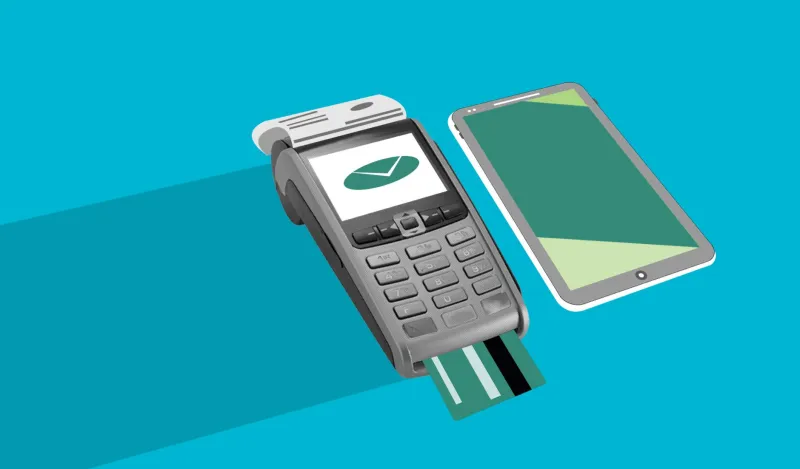
Debit and credit card payments generate rich metadata. The card network sees the merchant category, the amount, the timestamp, and the card-issuing bank. The bank sees the billing address, the cardholder name, and the device or IP address associated with the authorization. The payment processor sees risk signals, velocity checks, and fraud scores. Even if the merchant is privacy-friendly, the rails are not.
A card payment also creates a dispute trail. If a transaction is flagged, the user may be asked to verify identity, provide documents, or explain the purchase. That process can attach more data to the original event. The card rail is convenient, but convenience often means a broader identity footprint.
App Stores Are Identity Brokers
Mobile app stores add another layer. A user who buys or subscribes through Apple or Google is not just paying a merchant. The app store account is tied to an email address, a payment method, a device, and often a family group or region. The app store may not know what the privacy coin is, but it knows who downloaded the app and when.
In-app purchases can be especially revealing because they combine the app store's identity record with the app's own account system. The user may believe the app is pseudonymous, but the billing relationship is not. The app store becomes an identity broker between the user's real-world payment method and the privacy-focused service.
Bank Fraud Systems Correlate
Banks and card issuers run fraud models that correlate devices, locations, and spending patterns. A first-time purchase from a crypto-related merchant may trigger a verification step. That step can ask for a one-time code, a security question, or a call to the bank. Each response adds data to the bank's profile. The bank is not trying to deanonymize the user's privacy coin holdings. It is trying to manage risk. The effect, however, is the same: the purchase becomes part of a financial identity record.
The On-Ramp Exposure Chain
The exposure chain usually looks like this: device, IP address, card number, billing address, email address, phone number, exchange or app account, and finally the wallet address. The chain does not need to be complete to be useful. A single link can connect a pseudonymous wallet to a real-world identity. A card authorization and a wallet withdrawal that occur close in time may be enough for an analyst to infer a relationship.
This is why privacy coin users should map their on-ramp before they use it. The map should include every party that sees the payment: the bank, the card network, the processor, the app store, the merchant, and any identity-verification vendor. The goal is not to defeat lawful controls. It is to understand where identity data is created and whether the user is comfortable with that disclosure.
Discipline Before the First Satoshi
DeepKraken's guidance is to begin with a threat model. A user who is buying a small amount for experimentation has different exposure than a user who is building a long-term private position. The payment rail should match the threat model. A card purchase is fast, but it is also one of the most identity-rich rails available. A bank transfer may be slower, but it can offer clearer records and fewer intermediaries. A regulated exchange may require identity verification, but it may also provide better data-retention disclosures than an app store.
Operational discipline also means separating identities where lawful and appropriate. A dedicated email address for privacy-sensitive services is a basic step. Reusing the same phone number, email, and device across privacy and non-privacy contexts weakens the separation. Screenshots and support tickets should be treated as disclosure events. Wallet addresses should not be posted publicly if they are linked to a funding source.
The blockchain is not the only ledger. The on-ramp is a ledger of its own, written by banks, processors, and app stores before the privacy coin ever moves. US users who ignore that ledger are relying on cryptography to solve a problem it was never designed to solve. The first coin is important, but the minute before it is the one that most often decides how private the position can be.