The Privacy Toolkit: 5 Technologies Every American Crypto User Should Know Before 2026
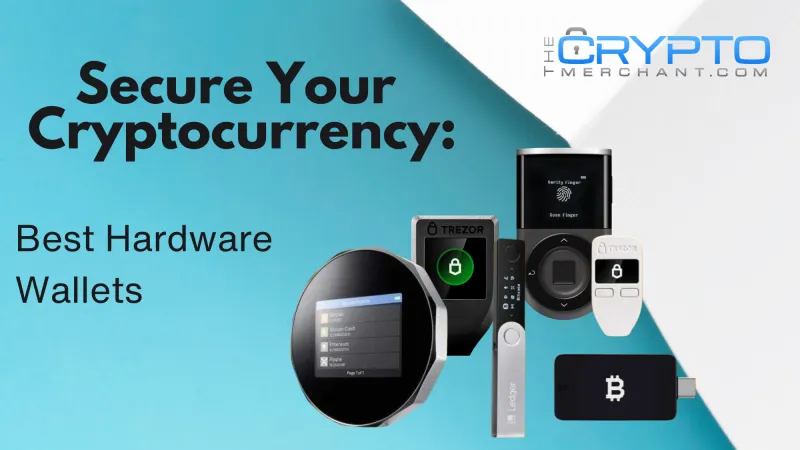
Photo: cryptocurrency privacy tools hardware wallet digital security anonymous technology, via www.thecryptomerchant.com
Privacy in cryptocurrency is not a single switch you flip — it is a layered architecture of deliberate choices, each with its own risk profile, usability cost, and legal context. For American users operating under the current regulatory environment, understanding these layers is no longer a niche interest reserved for cypherpunks and developers. It is practical financial literacy.
This guide does not promise complete anonymity. No honest resource should. What it offers instead is a clear-eyed breakdown of the tools that matter most, what each one actually does, and what you should realistically expect when using it in the United States in 2026.
1. Hardware Wallets: Your First Line of Defense
What They Do
A hardware wallet is a physical device that stores your private keys offline, isolated from internet-connected systems. Devices from manufacturers such as Ledger, Trezor, and Coldcard keep your cryptographic credentials in a secure element, meaning that even if your computer is fully compromised by malware, your funds remain inaccessible.
Why They Matter for Privacy
Privacy and security are distinct but deeply related concepts. A hardware wallet does not obscure your on-chain transaction history — blockchain data remains public regardless of how you store your keys. What it does is prevent unauthorized access to your funds and, critically, prevent the kind of account compromise that can force your transaction history into the hands of attackers or third parties.
For American users, hardware wallets also provide meaningful insulation from exchange failures, regulatory freezes on custodial accounts, and the data breach risks endemic to centralized platforms.
Honest Trade-offs
Setup requires technical comfort. Recovery phrase management is the single most common point of failure — losing your seed phrase means losing your funds permanently, with no customer support recourse. Hardware wallets also do nothing to anonymize transactions once funds are moved on-chain.
Risk Assessment: Low regulatory risk. Hardware wallet ownership is entirely legal in the United States and carries no compliance implications.
2. Privacy Coins: Anonymity Built Into the Protocol
What They Do
Privacy coins are cryptocurrencies designed from the ground up to obscure transaction details. Monero (XMR) uses ring signatures, stealth addresses, and RingCT to make sender, recipient, and transaction amount cryptographically opaque by default. Zcash (ZEC) offers optional shielded transactions using zk-SNARKs, a form of zero-knowledge proof.
Why They Matter
Bitcoin and Ethereum transactions are pseudonymous, not anonymous. Every transaction is permanently recorded on a public ledger, and blockchain analytics firms — several of which hold contracts with US federal agencies — have become highly effective at tracing pseudonymous activity back to real identities when combined with exchange KYC data. Privacy coins represent the most technically robust response to this surveillance infrastructure.
Honest Trade-offs
Accessibility has declined significantly for American users. Several major US-regulated exchanges, including Kraken (the centralized exchange, unaffiliated with DeepKraken) and Bittrex prior to its closure, delisted Monero and other privacy coins under regulatory pressure. Acquiring privacy coins now typically requires peer-to-peer markets, non-US exchanges, or atomic swap protocols — each adding friction and its own risk profile.
Zcash's optional privacy model is also worth scrutinizing: studies have shown that the majority of ZEC transactions use transparent addresses, which substantially weakens the anonymity set for shielded users.
Risk Assessment: Moderate to elevated regulatory scrutiny in the US. Legal to hold, but increasingly difficult to acquire through compliant domestic channels.
3. Decentralized Exchanges (DEXs): Trading Without Custodians
What They Do
Decentralized exchanges facilitate asset swaps through smart contracts rather than centralized order books. Platforms such as Uniswap, SushiSwap, and THORChain allow users to trade directly from their own wallets, without creating an account, submitting identification documents, or transferring custody of their assets to a third party.
Why They Matter
The KYC requirements at centralized US exchanges create a direct link between your verified identity and your on-chain transaction history. Every trade you execute on a regulated platform becomes part of a data set that is legally accessible to federal agencies through subpoena and, in some cases, proactively shared. DEXs sever that link at the point of trade.
Cross-chain DEX aggregators and privacy-preserving DEX front-ends add additional layers, routing transactions through multiple liquidity pools to further obscure transaction trails.
Honest Trade-offs
DEXs typically offer less liquidity than major centralized exchanges, resulting in higher slippage for large trades. Smart contract risk — the possibility of bugs or exploits in the underlying code — is real and has resulted in significant losses across the DeFi ecosystem. Front-end interfaces for DEXs have also begun implementing their own geo-restrictions for US users following regulatory guidance, though the underlying smart contracts remain accessible.
Risk Assessment: Moderate. Using a DEX is not inherently illegal for US users, but regulatory treatment of DeFi is actively evolving, and certain DEX activities may trigger reporting obligations depending on how courts and agencies ultimately interpret existing statutes.
4. VPNs and the Tor Network: Obscuring Your Network Footprint
What They Do
A Virtual Private Network encrypts your internet traffic and routes it through a server in a location of your choosing, masking your IP address from the websites and services you access. The Tor network goes further, routing your traffic through multiple volunteer-operated nodes, making origin tracing substantially more difficult.
Why They Matter for Crypto Users
Your IP address is metadata, and metadata is often more revealing than content. When you connect to a blockchain node, a DEX front-end, or a cryptocurrency forum, your IP address can be logged and, in some circumstances, correlated with on-chain activity. Blockchain analytics firms have documented methodologies for linking IP addresses to wallet addresses through node connectivity data.
Using a reputable no-log VPN or routing crypto-related activity through Tor adds a network-layer barrier between your physical location and your digital activity.
Honest Trade-offs
VPN providers vary enormously in trustworthiness. Many services that market themselves as privacy-focused have produced user logs in response to legal requests, contradicting their stated policies. Jurisdiction matters: a VPN provider incorporated in the United States is subject to US legal process. Providers in jurisdictions without mandatory data retention laws offer stronger structural protections.
Tor introduces latency that can make time-sensitive trading impractical. It is better suited to research, wallet management, and non-latency-sensitive interactions.
Risk Assessment: Low. VPN and Tor usage is entirely legal in the United States. No compliance implications attach to their use.
5. Coin Mixing and CoinJoin: Breaking the Transaction Chain
What They Do
Coin mixing services and CoinJoin implementations pool transactions from multiple users, breaking the deterministic link between sending and receiving addresses. Bitcoin Wasabi Wallet and JoinMarket implement CoinJoin natively. Third-party mixing services operate similarly but introduce custodial risk.
Why They Matter
For users whose primary asset is Bitcoin — which remains the dominant cryptocurrency by adoption — mixing represents the most direct method of disrupting on-chain surveillance. A properly executed CoinJoin transaction makes it computationally expensive for analytics tools to determine which output corresponds to which input.
Honest Trade-offs
This is the highest-risk category in this guide from a regulatory perspective, and that must be stated plainly. The US Treasury's sanctioning of Tornado Cash established a precedent that mixing services can be designated as sanctions targets. While CoinJoin implementations differ architecturally from centralized mixers, the legal boundaries remain unsettled. Several US exchanges have flagged or frozen accounts that received funds traceable to mixing activity, a practice known as "taint analysis."
Users should approach mixing tools with full awareness of this landscape and should not rely solely on this guide for legal guidance. The legal analysis is evolving, and individual circumstances matter.
Risk Assessment: Elevated. Not categorically illegal, but subject to active regulatory scrutiny and potential account consequences on centralized platforms.
Building Your Stack
No single tool in this list provides comprehensive privacy on its own. Effective financial privacy in 2026 is the product of combining complementary layers: securing keys with a hardware wallet, transacting through DEXs, connecting through a trusted VPN, and selecting assets whose underlying protocols align with your privacy requirements.
DeepKraken's perspective is straightforward: privacy is not a feature to be added when convenient. It is an architectural commitment that must be considered at every layer of your setup. The tools exist. The knowledge is accessible. The choice of how to proceed belongs to you.