Leaving the Exchange Behind: The Self-Custody Revolution Reshaping American Crypto in 2026
Photo: Darkcoin, MIT, via Wikimedia Commons
For years, the centralized exchange served as the default entry point for most Americans entering the cryptocurrency market. The convenience was undeniable: a familiar interface, customer support channels, and the comfort of a known brand absorbing the complexity of private key management. That comfort, however, has proven increasingly fragile. In 2026, a measurable and accelerating wave of users is choosing to withdraw their holdings from exchange-controlled wallets and assume direct custody of their own assets.
This is not a fringe movement. On-chain data from multiple analytics firms has documented sustained spikes in net outflows from major centralized platforms, with the trend intensifying following each new regulatory enforcement action or security incident. Understanding why this is happening — and what it means for American crypto users navigating an opaque post-2024 regulatory environment — requires examining both the technical realities and the behavioral forces at play.
The Catalysts: Why Now?
Three distinct pressure vectors are converging to push users toward self-custody.
Exchange security failures remain the most visceral motivator. The history of centralized platforms is punctuated by catastrophic breaches — from early incidents that defined the industry's reputation to more recent compromises affecting platforms that users had considered mature and trustworthy. When an exchange is hacked, users holding assets in custodial wallets have no recourse beyond the platform's own recovery procedures, which are frequently inadequate. The phrase "not your keys, not your coins" has graduated from a hobbyist maxim to a widely accepted risk management principle.
Regulatory unpredictability represents a subtler but equally powerful force. The post-2024 enforcement environment in the United States has demonstrated that regulatory agencies are willing to freeze assets, compel disclosures, and impose operational restrictions on exchanges with limited warning. Users who hold assets on a centralized platform are, in effect, trusting that platform to remain compliant, solvent, and operationally intact under conditions that have proven anything but stable. Self-custody removes that dependency entirely.
Privacy erosion is the third driver, and it is particularly relevant to the audience that platforms like DeepKraken serve. Centralized exchanges operating under US jurisdiction are required to collect extensive Know Your Customer (KYC) data and report user activity to federal agencies. Every transaction conducted through a custodial account generates a permanent, auditable record that is accessible to government entities. For users who regard financial privacy as a fundamental right rather than a concession, this is untenable.
Custody Options: A Practical Comparison
Moving assets off an exchange wallet does not mean all custody solutions are equivalent. The spectrum ranges from marginally better alternatives to genuinely sovereign control.
Software wallets — applications installed on a desktop or mobile device — represent the most accessible entry point into self-custody. They give users direct control over their private keys without requiring additional hardware. The trade-off is exposure to the security vulnerabilities of the host device. A compromised operating system or a malicious application can still result in asset loss.
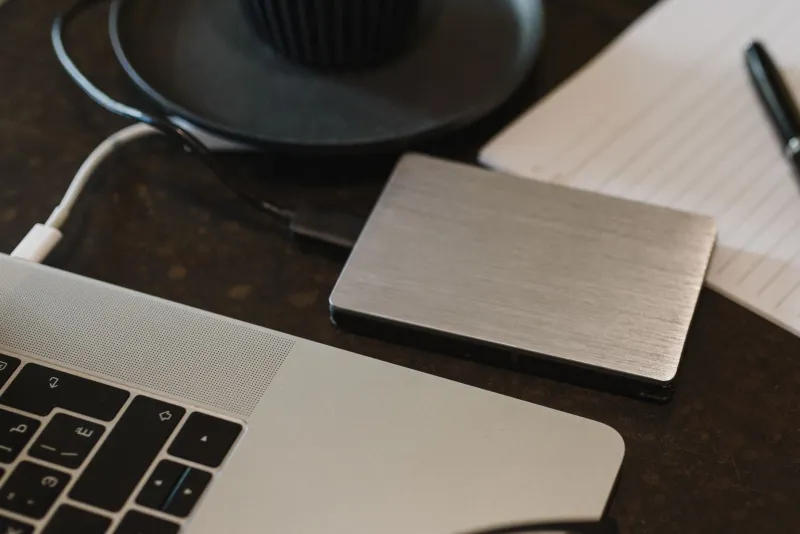
Hardware wallets are widely regarded as the gold standard for individual self-custody. These dedicated physical devices store private keys in an isolated environment, signing transactions without exposing the key material to an internet-connected system. For users holding significant balances, the modest cost of a hardware wallet is arguably the most rational security expenditure available.
Decentralized exchanges (DEXs) and non-custodial protocols offer an alternative for users who need to trade without surrendering custody. Rather than depositing assets with a platform, users interact directly with smart contracts, retaining control of their keys throughout the transaction. Liquidity has improved substantially on major DEX platforms over the past two years, narrowing — though not eliminating — the execution quality gap with centralized venues.
Multi-signature arrangements provide an additional layer of security for sophisticated users or organizations. By requiring multiple independent keys to authorize a transaction, multi-sig configurations eliminate single points of failure and are increasingly accessible through user-friendly interfaces.
What This Shift Means for Market Structure
The migration toward self-custody carries structural implications that extend beyond individual security decisions. When assets leave centralized exchange wallets, they exit the liquidity pools that those platforms use to facilitate trading. Sustained outflows reduce the depth of order books, which can increase price volatility and widen bid-ask spreads during periods of stress.
At the same time, the growth of DEX volume suggests that liquidity is not disappearing — it is migrating to decentralized venues. This redistribution has meaningful consequences for market surveillance. Regulators and analytics firms that rely on centralized exchange data to monitor market activity find their visibility diminished as trading volume moves on-chain and across protocols that do not maintain traditional order books.
For privacy-conscious users, this is a feature rather than a flaw. A market structure in which activity is distributed across decentralized protocols and self-custodied wallets is inherently more resistant to the kind of blanket surveillance that centralized platforms facilitate.
Practical Steps for American Users Considering the Transition
For those evaluating a move away from custodial exchange wallets, a measured approach reduces risk.
Begin by auditing existing holdings and identifying which assets are held on which platforms. Prioritize moving assets that represent the largest share of your portfolio or that you do not intend to trade actively in the near term. These are the holdings for which the security benefits of self-custody are most immediately valuable.
Research hardware wallet options carefully, purchasing directly from manufacturers rather than third-party resellers to avoid the risk of receiving compromised devices. When generating a seed phrase, do so on a device that has never been connected to the internet if possible, and store the phrase in a physically secure location that is not digitally accessible.
For assets you intend to continue trading, evaluate whether a non-custodial DEX interface can meet your liquidity needs. For many users, the answer in 2026 is increasingly yes.
Finally, consider your broader privacy posture. Self-custody addresses one dimension of financial privacy, but on-chain transactions remain visible on public blockchains. Combining self-custody with privacy-preserving protocols and careful transaction hygiene provides a more comprehensive approach to financial sovereignty.
The Deeper Principle
The migration away from exchange wallets is, at its core, an expression of a principle that has always been central to the cryptocurrency thesis: that individuals should be able to hold and transfer value without requiring the permission or cooperation of an intermediary. Centralized exchanges served a purpose in making that technology accessible, but they also reintroduced the dependency on trusted third parties that the technology was designed to eliminate.
The users making this transition in 2026 are not simply responding to a security threat or a regulatory development. They are acting on a considered judgment that the risks of custodial dependence outweigh its conveniences — and that genuine financial sovereignty requires accepting the responsibility that comes with it.
For those navigating this transition, the resources and analysis available through platforms like DeepKraken are designed to support informed, autonomous decision-making in an environment where the cost of uninformed choices continues to rise.