Pressure Points: How Federal Scrutiny Is Forcing Privacy-Centric Crypto Platforms to Evolve or Disappear
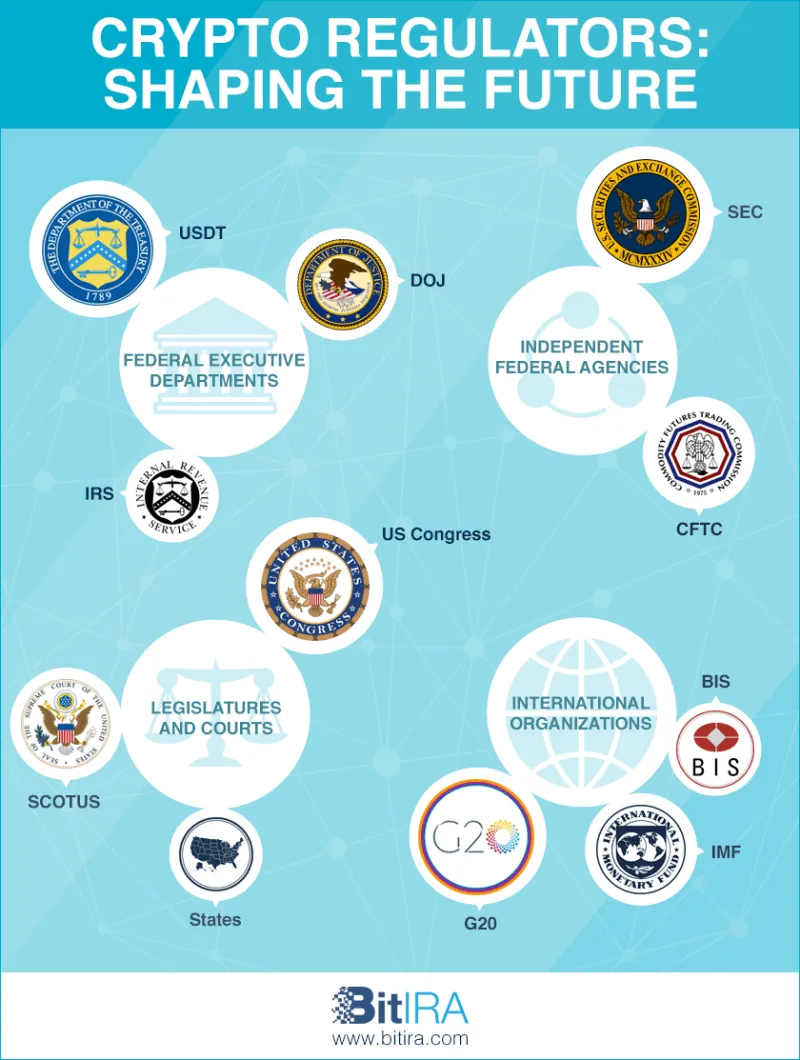
Photo: federal courthouse cryptocurrency regulation government oversight digital privacy, via www.bitira.com
The tension between individual financial privacy and government oversight is not new. It predates cryptocurrency by centuries, stretching back to debates over banking secrecy, offshore accounts, and the fundamental question of whether a citizen's financial transactions are inherently public information. What is new, however, is the speed and technical sophistication with which federal agencies are now pursuing privacy-focused cryptocurrency platforms — and the equally sophisticated countermeasures those platforms are deploying in response.
For American users who rely on pseudonymous or fully anonymous digital asset infrastructure, 2024 has arrived as a reckoning year. The regulatory architecture being assembled today will define the operational boundaries of decentralized finance for the next decade.
The Enforcement Actions That Changed Everything
To understand the current climate, one must examine the sequence of enforcement actions that collectively constitute what analysts are now calling the new compliance paradigm for crypto privacy.
The Financial Crimes Enforcement Network (FinCEN), the Department of Justice (DOJ), and the Office of Foreign Assets Control (OFAC) have each escalated their involvement in cryptocurrency enforcement over the past several years. The sanctioning of Tornado Cash in August 2022 — a smart contract-based mixing protocol — marked a turning point that few in the industry had anticipated. For the first time, the US Treasury did not merely sanction an individual or a company; it sanctioned immutable code. The implications were immediate and far-reaching.
Legal challenges followed. The Fifth Circuit Court of Appeals issued a partial ruling in late 2024 that drew a distinction between immutable smart contracts and more centralized mixing services, offering a narrow but significant legal foothold for privacy advocates. The case remains contested, but it introduced judicial nuance into what had previously been a blunt enforcement posture.
Separately, the prosecution of founders associated with privacy-preserving protocols sent an unmistakable signal: operating infrastructure that facilitates anonymous transactions, even without direct knowledge of illicit activity, may constitute criminal liability under US money transmission statutes.
The Compliance Dilemma at the Core
For exchanges and protocols that have built their identity around user anonymity, the compliance challenge is not merely bureaucratic — it is existential. Know Your Customer (KYC) and Anti-Money Laundering (AML) requirements, as currently interpreted by FinCEN, are structurally incompatible with the foundational architecture of many privacy-preserving platforms.
A traditional centralized exchange can implement identity verification at the account creation stage. A decentralized protocol operating through smart contracts has no such chokepoint. There is no customer relationship to verify, no account to suspend, and often no legal entity to regulate.
This architectural reality has led federal regulators to pursue a different strategy: targeting the developers, front-end operators, and liquidity providers who interact with these protocols. By establishing liability at the human layer rather than the protocol layer, agencies have created a chilling effect that extends well beyond any single enforcement action.
Industry legal observers note that this approach raises serious constitutional questions. First Amendment arguments — that writing and publishing code constitutes protected speech — have gained traction in certain circuit courts, though no definitive Supreme Court ruling has yet settled the matter.
How Platforms Are Adapting
The platforms that have survived this regulatory environment have done so through a combination of legal restructuring, technical innovation, and geographic diversification.
Some have relocated their legal entities to jurisdictions with more permissive regulatory frameworks — the Cayman Islands, Panama, and certain Eastern European jurisdictions have become common destinations. Others have pursued a deliberate legal strategy of radical decentralization: eliminating any identifiable development team, dissolving corporate structures, and transitioning governance entirely to token-holding communities. The theory is that a protocol with no owner cannot be regulated as a business.
On the technical side, zero-knowledge proof systems have emerged as the most promising infrastructure for privacy preservation that may nonetheless satisfy certain regulatory interpretations. ZK-proofs allow a user to cryptographically demonstrate compliance with a given rule — such as not appearing on a sanctions list — without revealing their underlying identity. Whether regulators will accept this as sufficient compliance remains an open and actively litigated question.
DeepKraken has observed that the most resilient platforms are those treating legal and technical architecture as inseparable disciplines, building regulatory defensibility directly into their protocol design rather than retrofitting compliance onto existing systems.
The Broader Stakes for American Users
For ordinary American cryptocurrency users, the regulatory battles playing out in federal courtrooms and agency rulemaking processes have direct, practical consequences.
Access to privacy-preserving tools has narrowed. Several mixing services and privacy coin exchange pairs have been delisted from US-accessible platforms following regulatory guidance. Users who previously relied on these tools for entirely lawful purposes — protecting personal financial data from commercial surveillance, shielding transaction histories from potential bad actors, or simply exercising what they consider a fundamental right to financial privacy — find themselves with fewer options.
The surveillance implications extend beyond cryptocurrency. The blockchain analytics industry, which includes firms holding government contracts, has developed increasingly sophisticated methods for tracing pseudonymous transactions across chains, exchanges, and time. The combination of on-chain analytics and exchange KYC data creates a financial surveillance infrastructure of unprecedented scope.
Expert Perspectives on the Road Ahead
Legal scholars and cryptography researchers who have studied this intersection offer a range of forecasts.
Some argue that the regulatory trajectory is ultimately unsustainable — that attempting to enforce identity requirements on decentralized, permissionless protocols is technically analogous to requiring the postal service to read every letter. The enforcement costs will eventually outpace the compliance benefits, and a more nuanced regulatory framework will emerge.
Others contend that the federal government's technical capabilities are advancing rapidly enough to make meaningful anonymity increasingly difficult to achieve at scale, regardless of what legal frameworks formally permit. The practical anonymity set — the number of users sharing similar transaction patterns — is shrinking as chain analysis tools grow more sophisticated.
A third perspective holds that the outcome will be jurisdictional fragmentation: a world in which Americans face one set of constraints, European users face another under MiCA regulations, and users in less regulated jurisdictions operate with substantially greater freedom. This fragmentation is already visible in the geographic access restrictions increasingly common among DeFi front-ends.
The Precedent Being Written Now
What is being established through these enforcement actions, court rulings, and regulatory guidance documents is not merely a set of rules for cryptocurrency. It is a precedent for how democratic governments will treat financial privacy in the digital age.
The decisions made in the next few years — in courtrooms, in congressional hearings, and in the technical architectures of the platforms that survive this period — will determine whether financial privacy remains a practical possibility for American citizens or becomes a privilege available only to those with the technical sophistication to navigate an increasingly restrictive landscape.
DeepKraken will continue to monitor these developments with the attention they deserve. For users committed to financial sovereignty, understanding the regulatory terrain is not optional — it is the foundation upon which every other decision rests.