DeepKraken Anonymous. Decentralized. Untracked.

DeepKraken

Anonymous. Decentralized. Untracked.

Latest Articles

Free Tokens, Lasting Links: The Privacy Ledger Behind an Airdrop Claim
Tools & Guides

Free Tokens, Lasting Links: The Privacy Ledger Behind an Airdrop Claim

Airdrop claims are often treated as harmless rewards, but the claim flow can collect social identities, IP addresses, device signals, and wallet relationships that persist long after the tokens are sold. This guide examines how sybil-scoring databases and claim receipts connect wallets in 2026.


The Registrar's Ledger: How Domain Infrastructure Maps Privacy Sites
Regulation & Policy

The Registrar's Ledger: How Domain Infrastructure Maps Privacy Sites

Before analysts trace a single coin, they can trace a domain. Registrar records, DNS logs, hosting providers, and certificate transparency data create an administrative map of privacy-focused crypto sites. This investigation examines why the domain layer remains a surveillance surface in 2026.

The Number That Outlives the Account: Phone-Linked Identity in Crypto
Operational Security

The Number That Outlives the Account: Phone-Linked Identity in Crypto

A phone number submitted once to an exchange can remain a durable identity anchor for years, linking old accounts, recovery workflows, carrier records, and new wallets. This analysis traces how number recycling, SIM swaps, and porting logs turn a familiar login detail into a persistent crypto identifier in 2026.

Receipts in the Aisle: Why America's Bitcoin Kiosks Document More Than They Exchange
Regulation & Policy

Receipts in the Aisle: Why America's Bitcoin Kiosks Document More Than They Exchange

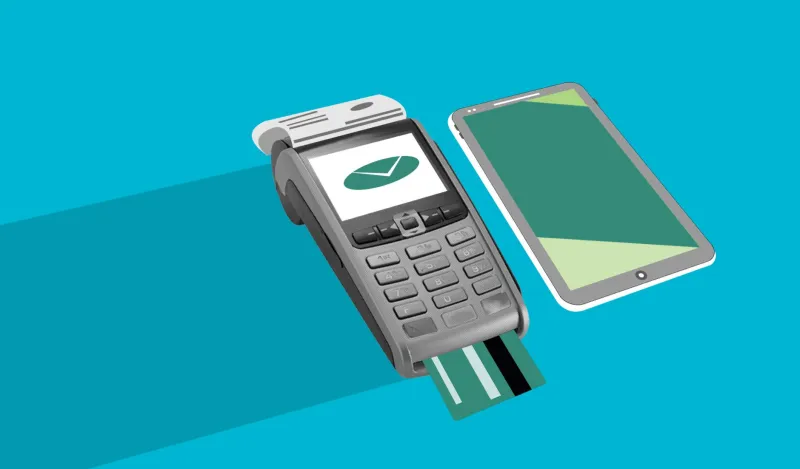
US bitcoin kiosks are often described as cash-to-crypto bridges, but their compliance architecture makes them one of the most documented retail on-ramps in the country. This analysis maps the ID scanners, phone checks, store cameras, and state reporting rules that turn a cash transaction into a durable record.

Before the First Coin: The On-Ramp Is the Privacy Test Most US Buyers Fail
Tools & Guides

Before the First Coin: The On-Ramp Is the Privacy Test Most US Buyers Fail

The privacy coin debate usually starts at the ledger, but most US users leak identity before the first coin arrives. Debit-card processors, app-store billing, bank fraud checks, and payment metadata form an exposure chain that cryptographic privacy cannot retroactively erase.

The Help Desk Remembers: How Routine Support Contacts Become Durable Crypto Identity Records
Operational Security

The Help Desk Remembers: How Routine Support Contacts Become Durable Crypto Identity Records

Privacy-focused crypto users audit wallets and chains but often overlook the support ticket. Voice calls, chat transcripts, recovery questions, and screen-sharing sessions can create a durable identity profile that outlasts the account being fixed.

Flagged Before You're Hidden: The Mixer Paradox That Sinks Operational Privacy
Tools & Guides

Flagged Before You're Hidden: The Mixer Paradox That Sinks Operational Privacy

Chain-analysis firms no longer treat a mixer as a black box — they treat it as a beacon. This piece examines why mixing draws scrutiny rather than deflecting it, and which operational disciplines actually hold up in 2026.

Your Passport, Listed at Forty Dollars: Inside the Gray Market for Surrendered Identities
Regulation & Policy

Your Passport, Listed at Forty Dollars: Inside the Gray Market for Surrendered Identities

Every American who completed exchange verification surrendered a high-resolution portrait of their financial self to a database they do not control. Increasingly, those databases end up for sale — and the buyers are not regulators.

Every Border a Checkpoint: The Quiet Globalization of Crypto's Disclosure Regime
Regulation & Policy

Every Border a Checkpoint: The Quiet Globalization of Crypto's Disclosure Regime

The FATF Travel Rule is transforming cross-border cryptocurrency transfers into mandatory identity disclosures, jurisdiction by jurisdiction. For American users, the borderless promise of digital money is being administratively dismantled one information-sharing agreement at a time.

Cold Storage, Warm Signals: How Hardware Wallets Betray the Privacy They Advertise
Tools & Guides

Cold Storage, Warm Signals: How Hardware Wallets Betray the Privacy They Advertise

Hardware wallets occupy a near-sacred position in the self-custody narrative, marketed as impenetrable vaults that sever the connection between your digital assets and any surveillance infrastructure. The reality is considerably more complicated. From USB metadata to firmware telemetry, the operational footprint of most consumer hardware wallet setups quietly reconstructs the very exposure profile users believed they had eliminated.

Trusted and Compromised: How Estate Planners, Accountants, and Family Members Become Disclosure Vectors for Your Crypto Holdings
Regulation & Policy

Trusted and Compromised: How Estate Planners, Accountants, and Family Members Become Disclosure Vectors for Your Crypto Holdings

The decision to involve a lawyer, accountant, or family member in cryptocurrency estate planning is rarely understood as a privacy event. Yet each conversation, each document, and each professional engagement creates a documented trail that regulatory bodies, civil litigants, and federal investigators may one day follow. This article examines the specific mechanisms through which trusted advisors become involuntary informants on holdings their clients believed were private.

The Fingerprint Beneath the Fee: How Operational Metadata Exposes Crypto Users That Transaction Privacy Cannot Shield
Tools & Guides

The Fingerprint Beneath the Fee: How Operational Metadata Exposes Crypto Users That Transaction Privacy Cannot Shield

Federal forensic analysts have largely moved past transaction amounts and wallet addresses as their primary investigative tools. The behavioral residue left by fee selection habits, confirmation timing, and transaction rhythm has become a far more durable and revealing fingerprint—one that persists even when amounts and addresses are deliberately obscured.

The Safety Illusion: How Regulated Custodians Sold American Crypto Users a Surveillance Package Disguised as Security
Regulation & Policy

The Safety Illusion: How Regulated Custodians Sold American Crypto Users a Surveillance Package Disguised as Security

The marketing language surrounding regulated cryptocurrency custodians has successfully conflated institutional security with personal safety, persuading millions of American users to voluntarily enroll in comprehensive financial surveillance programs. Beneath the promises of insurance coverage and regulatory legitimacy lies a compliance architecture designed not to protect users, but to monitor them. This investigation examines whether the security-privacy tradeoff that custodians offer is genu

Fifty Laboratories of Surveillance: How State Crypto Licensing Is Quietly Building a National Tracking Grid
Regulation & Policy

Fifty Laboratories of Surveillance: How State Crypto Licensing Is Quietly Building a National Tracking Grid

America's patchwork of state-level cryptocurrency licensing regimes is doing something federal regulators have struggled to accomplish alone: constructing a distributed, multi-jurisdictional surveillance architecture that aggregates into a remarkably comprehensive financial portrait. Each state's compliance obligation generates its own data trail, and those trails converge in ways that technical privacy measures were never designed to address.

When You Acted: How Federal Prosecutors Turn Blockchain Timestamps Into Courtroom Confessions
Regulation & Policy

When You Acted: How Federal Prosecutors Turn Blockchain Timestamps Into Courtroom Confessions

Federal investigators increasingly treat the 'when' of a transaction as more incriminating than the 'what.' Even when amounts and addresses are obscured through privacy techniques, the temporal metadata embedded in blockchain activity can construct a prosecutorial timeline that proves devastating in court. Understanding how timestamp forensics operates is no longer optional for privacy-conscious American cryptocurrency users.

The Inheritance Trap: How Passing Crypto Through Probate Dismantles the Privacy Architecture You Built
Regulation & Policy

The Inheritance Trap: How Passing Crypto Through Probate Dismantles the Privacy Architecture You Built

When cryptocurrency holdings enter the probate system, the anonymity frameworks their original owners carefully constructed can unravel almost instantaneously. Beneficiaries who never participated in the original privacy design suddenly find themselves compelled to interface with KYC systems, court records, and estate administrators. Understanding how inherited digital assets become forensic liabilities is now an essential component of responsible crypto estate planning.

The Incomplete Escape: Why Self-Custody Without Operational Discipline Leaves You More Exposed Than Before
Tools & Guides

The Incomplete Escape: Why Self-Custody Without Operational Discipline Leaves You More Exposed Than Before

Migrating assets from a centralized exchange to a self-custody wallet is widely treated as the final step toward financial privacy — but for most users, it is merely the first. Without disciplined operational security practices governing hardware, network behavior, and transactional timing, self-custody can paradoxically consolidate your forensic footprint rather than dissolve it.

The Withdrawal Paradox: How Your Exit From an Exchange Becomes the Foundation of Your Forensic Profile
Tools & Guides

The Withdrawal Paradox: How Your Exit From an Exchange Becomes the Foundation of Your Forensic Profile

Migrating assets from a centralized exchange to a self-custody wallet is widely regarded as a privacy milestone. What most users fail to recognize is that the withdrawal itself — its timing, amount, and destination — is frequently the most durable piece of surveillance evidence an investigator will ever need. Understanding the mechanics of this paradox is the first step toward addressing it.

Seized in Plain Sight: How Civil Asset Forfeiture Reaches Past the Blockchain Into Your Hardware Wallet
Regulation & Policy

Seized in Plain Sight: How Civil Asset Forfeiture Reaches Past the Blockchain Into Your Hardware Wallet

Hardware wallets are widely regarded as the gold standard of self-custody, but physical possession of a device may create legal exposure that blockchain-level privacy cannot neutralize. Federal and state civil asset forfeiture statutes have historically required little more than probable cause to initiate seizure proceedings, and documented cases suggest that law enforcement is increasingly treating hardware wallets as tangible instruments of financial activity subject to those same powers. This

Compelled Compliance: How Cryptocurrency Exchanges Became the Federal Government's Preferred Surveillance Instrument
Regulation & Policy

Compelled Compliance: How Cryptocurrency Exchanges Became the Federal Government's Preferred Surveillance Instrument

American cryptocurrency exchanges no longer function merely as trading venues — they operate as mandatory reporting nodes embedded within federal financial surveillance architecture. Through a layered framework of FinCEN guidance, OFAC mandates, and suspicious activity reporting obligations, regulators have quietly transformed on-ramps and off-ramps into the most consequential choke points in the entire digital asset ecosystem.