Proof Without Disclosure: What Zero-Knowledge Cryptography Actually Does to Financial Privacy

Photo: Alexey Komarov, CC BY-SA 4.0, via Wikimedia Commons
Imagine being required to prove your bank balance exceeds a certain threshold — without showing the actual number. Or confirming that a transaction was legitimate — without identifying the sender, the recipient, or the amount transferred. This is not a hypothetical feature of some distant financial system. It is a functional capability that zero-knowledge proofs deliver today, and its implications for American crypto users are substantial enough to warrant serious attention.
At DeepKraken, we recognize that cryptographic tools are only useful when people understand them. This piece does not assume a mathematics background. It assumes only that you have a stake in the question of who can see your financial activity — and why that question is becoming more urgent.
The Core Concept, Without the Jargon
A zero-knowledge proof is a cryptographic method by which one party — the prover — can convince another party — the verifier — that a specific statement is true, without communicating anything beyond the truth of that statement itself.
The canonical illustration involves a colorblind verifier and two balls of different colors. The prover claims the balls are different colors. Without revealing which is which, the prover can repeatedly demonstrate this through a protocol that would statistically fail if the balls were identical. After enough rounds, the verifier is convinced — but has learned nothing about the actual colors.
In blockchain contexts, the statement being proved is typically something like: "This transaction is valid and the sender has sufficient funds" — without disclosing the sender's identity, the recipient's address, or the transaction amount. The verifier (the network) reaches consensus on validity without accessing the underlying data.
Two primary variants dominate current deployment: zk-SNARKs (Succinct Non-interactive Arguments of Knowledge) and zk-STARKs (Scalable Transparent Arguments of Knowledge). SNARKs are computationally efficient but require an initial trusted setup phase — a potential vulnerability if that setup is compromised. STARKs eliminate the trusted setup requirement and are considered more resistant to quantum computing attacks, but they produce larger proof sizes that carry higher data overhead.
Where This Technology Is Actually Being Deployed
Zero-knowledge proofs have moved decisively from academic cryptography into production infrastructure. The deployment contexts most relevant to American crypto users fall into three categories.
Layer 2 Scaling Solutions
The Ethereum ecosystem's Layer 2 landscape has become the primary proving ground for ZK technology at scale. zkSync Era and Polygon zkEVM both use ZK proof systems to batch transactions off the main Ethereum chain, submit a single validity proof to the base layer, and achieve settlement with dramatically reduced gas costs. The privacy implications here are partial rather than complete — transaction data is still visible on-chain in most implementations — but the cryptographic infrastructure being built has direct applicability to privacy-preserving variants.
StarkNet, built on zk-STARKs, represents a more ambitious architectural vision. Its Cairo programming language enables complex computation to be proved off-chain and verified on-chain, opening possibilities for private smart contract execution that earlier systems could not support.
Privacy Coins and Native ZK Implementations
Zcash remains the most prominent example of ZK proofs applied directly to transaction privacy. Its shielded transactions use zk-SNARKs to conceal sender, recipient, and amount while allowing the network to verify that no new currency was created and that the sender held sufficient funds. The regulatory pressure Zcash has faced — including delistings from several centralized exchanges — is itself a testament to how seriously financial surveillance apparatus takes this capability.
Aztec Network, currently in active development, aims to bring programmable privacy to Ethereum through a ZK-based architecture that would allow private DeFi interactions — a category that does not meaningfully exist today on public blockchains.
Cross-Chain Bridges
Bridges have been among the most vulnerable components in the crypto stack, responsible for billions in losses through exploits. ZK-based bridges represent a meaningful security improvement by replacing trust assumptions with mathematical verification. Projects including Succinct Labs and Polyhedra Network are building ZK light clients that allow one chain to verify the state of another without trusting a committee of validators. For users moving assets between chains — a necessity in a multi-chain ecosystem — this matters both for security and for the privacy properties it can preserve across the transfer.
The Surveillance Context That Makes This Relevant
American financial activity exists within a surveillance architecture that is more extensive than most users appreciate. The Bank Secrecy Act obligates financial institutions to report transactions above certain thresholds and to maintain records that can be subpoenaed. The Infrastructure Investment and Jobs Act of 2021 extended broker reporting requirements into crypto in ways that remain contested in their implementation but signal clear regulatory intent.
On public blockchains, the situation is in some respects more exposed than traditional banking. Every transaction on Bitcoin or Ethereum is permanently recorded on a public ledger, accessible to anyone with an internet connection and to the blockchain analytics firms — Chainalysis, Elliptic, TRM Labs — that have built substantial businesses around de-anonymizing that data. The pseudonymity that early Bitcoin adopters assumed provided meaningful privacy has proven, under sustained analytical pressure, to be considerably weaker than advertised.
Zero-knowledge proofs offer a technically grounded response to this environment. They do not require trusting a company's privacy policy or a jurisdiction's legal protections. The privacy guarantee is mathematical.
Limitations and Honest Caveats
ZK technology is not a complete solution to financial surveillance, and representing it as such would be misleading.
Proof generation remains computationally intensive. Generating a ZK proof on consumer hardware can take seconds to minutes depending on transaction complexity — a meaningful friction point for everyday use cases. Hardware acceleration is improving this, but the gap between ZK-enabled and conventional transactions has not closed entirely.
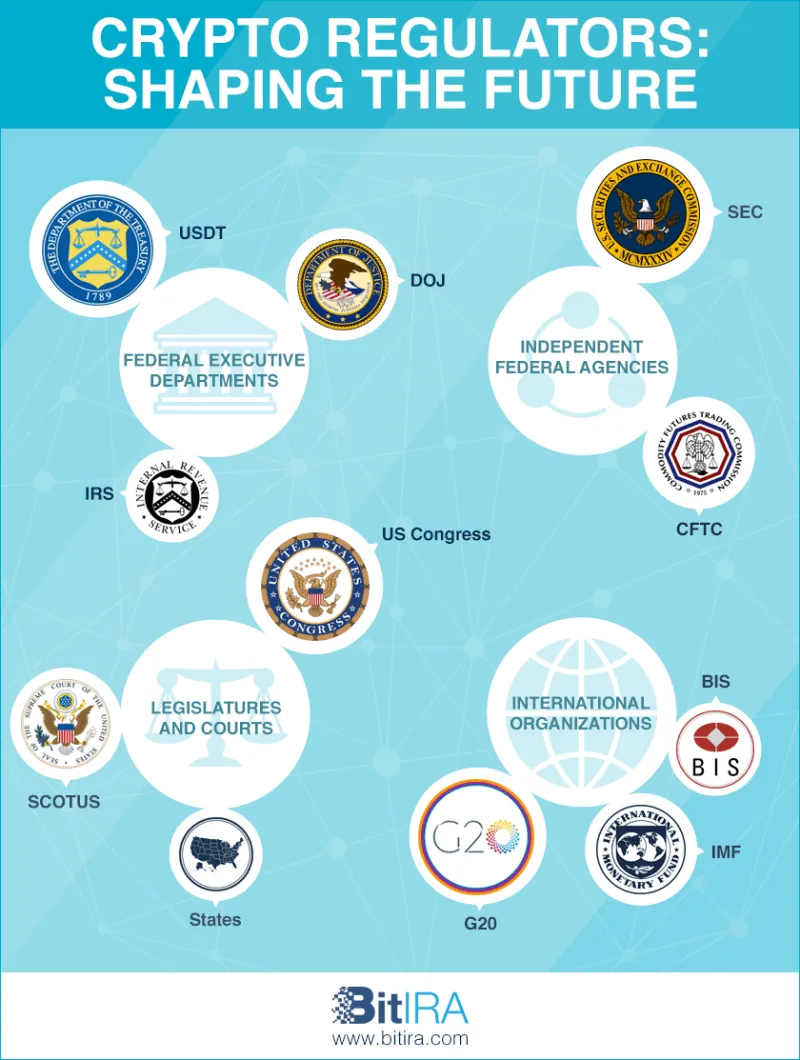
Regulatory treatment of ZK-enabled privacy features is actively contested. The Treasury Department's sanctions against Tornado Cash — a mixing protocol rather than a ZK system, but one with overlapping privacy goals — established a precedent that protocol-level privacy tools can be designated as sanctions targets. Whether ZK implementations face similar treatment remains an open legal question with significant implications for American users and developers.
Finally, privacy at the transaction layer does not address privacy at the network layer. IP address correlation, timing analysis, and metadata collection by infrastructure providers can potentially compromise identities even when transaction content is cryptographically concealed. A complete privacy posture requires attention to multiple layers simultaneously.
Why It Matters Now
The window in which privacy-preserving cryptographic tools can be built, deployed, and normalized before regulatory frameworks crystallize around them is not indefinitely open. The technical sophistication of ZK proofs, and the legitimate financial privacy interests they serve, deserve to be understood by American investors before that window narrows further.
The mathematics does not ask for permission. Understanding it, however, is a choice — and one with meaningful consequences for anyone who believes that financial privacy is a reasonable expectation rather than a suspicious ambition.