Protocol Survival: Evaluating Monero, Zcash, and the Privacy Coin Landscape Under Sustained Government Pressure

Photo: Steve Jurvetson from Los Altos, USA, CC BY 2.0, via Wikimedia Commons
The regulatory posture of the United States government toward financial privacy has hardened considerably over the past several years. Enforcement actions, exchange delistings, and legislative proposals targeting privacy-preserving technologies have forced a reckoning within the cryptocurrency community: not all privacy coins are created equal, and the distinctions between them have acquired urgent practical significance.
For American users who regard financial privacy as a legitimate and defensible interest, the choice of protocol is no longer an abstract technical preference. It is a decision with real consequences for anonymity, fungibility, and long-term utility. This analysis examines the three most prominent privacy-focused cryptocurrencies — Monero, Zcash, and a broader category of emerging alternatives — through the lens of their architectural strengths, regulatory exposure, and realistic prospects for continued adoption.
The Regulatory Threat Model
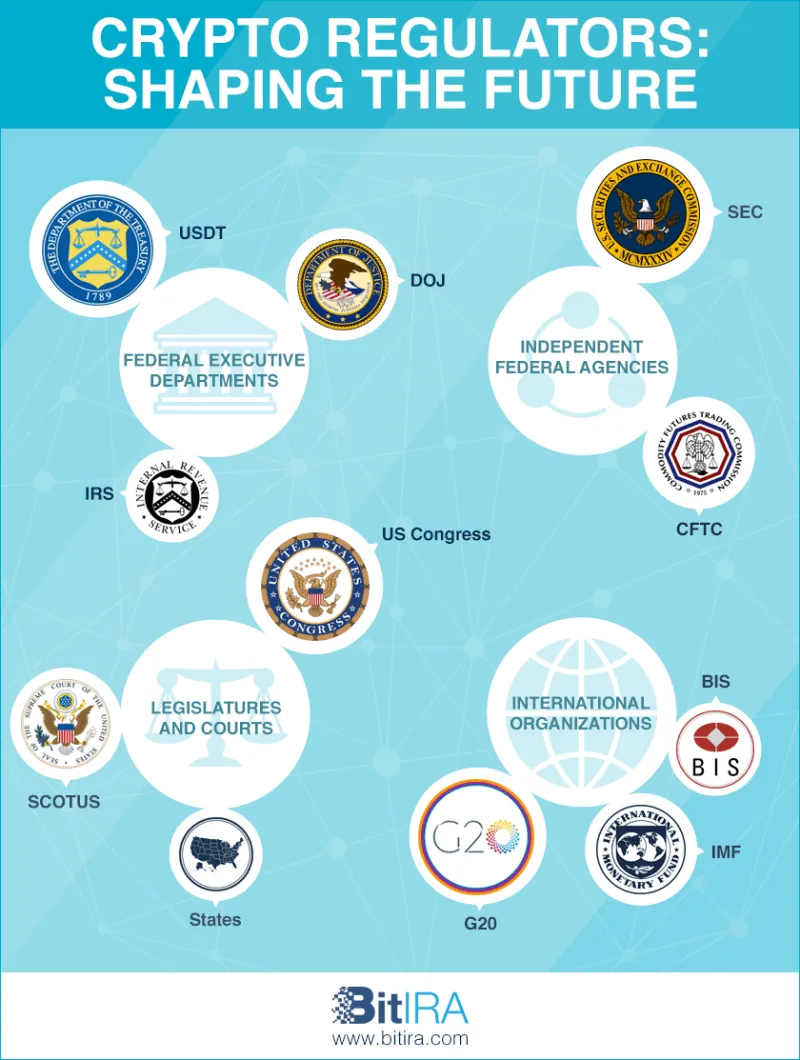
Before evaluating individual protocols, it is worth defining the threat environment they must withstand. US regulatory agencies, including the Financial Crimes Enforcement Network (FinCEN), the Office of Foreign Assets Control (OFAC), and the Internal Revenue Service, have demonstrated both the intent and the technical capacity to pursue blockchain analytics at scale. Their primary tools include graph analysis of transaction flows, clustering algorithms that associate addresses with real-world identities, and compelled disclosure from custodial platforms.
The effectiveness of any privacy protocol must be assessed against this specific threat model. A coin that obscures transaction details on-chain but routes through KYC-compliant exchanges provides limited practical privacy. Conversely, a protocol with robust on-chain anonymity that has been delisted from all accessible fiat on-ramps faces a different kind of viability problem.
Monero: Privacy by Default, Scrutiny by Design
Monero (XMR) occupies a distinctive position in the privacy coin landscape because its anonymity features are not optional — they are mandatory and applied to every transaction on the network. The protocol employs three interlocking cryptographic mechanisms: ring signatures, which obscure the true sender by bundling their transaction with a set of decoy outputs; stealth addresses, which generate one-time receiving addresses that cannot be linked to a user's public address; and RingCT (Ring Confidential Transactions), which conceals transaction amounts.
The practical consequence of this architecture is that Monero's blockchain does not contain a legible transaction graph. Unlike Bitcoin, where every transfer between addresses is permanently and publicly recorded, Monero's ledger reveals only that transactions occurred — not who sent what to whom, or in what quantity. This is not a feature that can be selectively disabled by regulators demanding transparency from an exchange; it is baked into the protocol itself.
This has made Monero the primary target of government blockchain analytics efforts. The IRS has contracted with private firms to develop Monero tracing capabilities, and those efforts have yielded partial results in limited contexts — particularly when users make operational security errors that expose identifying information at the network or exchange layer rather than the cryptographic layer. The consensus among independent cryptographers is that Monero's core privacy guarantees remain intact when used correctly.
The regulatory cost of this robustness has been significant. Major US-accessible exchanges have delisted Monero under pressure from regulators and banking partners. This creates a genuine friction point for American users seeking to acquire or liquidate XMR through conventional channels. Peer-to-peer markets and decentralized atomic swap protocols have partially compensated for this gap, but they introduce their own complexity and liquidity constraints.
Assessment: Strongest on-chain privacy guarantees of any major protocol. Regulatory pressure has successfully reduced exchange accessibility without compromising the underlying cryptography. Viable for users willing to navigate non-custodial acquisition channels.
Zcash: Selective Disclosure and Its Consequences
Zcash (ZEC) approaches privacy through a fundamentally different architectural philosophy. The protocol offers two transaction types: transparent transactions, which function identically to Bitcoin in terms of public visibility, and shielded transactions, which use zk-SNARK (zero-knowledge succinct non-interactive argument of knowledge) cryptography to conceal sender, recipient, and amount.
The cryptographic foundation of Zcash's shielded pool is, by most technical assessments, exceptionally strong. zk-SNARKs are a sophisticated and mathematically rigorous privacy mechanism, and shielded Zcash transactions do not readily yield to the graph analysis techniques that are effective against transparent blockchains.
The critical weakness is adoption. Despite being available since the protocol's launch, shielded transactions have historically represented a minority of Zcash activity. When the majority of transactions on a network are transparent, the shielded pool becomes a smaller anonymity set — and users who move funds into and out of that pool may inadvertently reveal information through the timing and pattern of those transfers.
Zcash's relationship with regulatory compliance is also more accommodating than Monero's. The Electric Coin Company, which developed Zcash, has engaged constructively with US regulatory bodies and has emphasized the protocol's capacity for selective disclosure — the ability for users to voluntarily reveal transaction details to auditors or regulators. This posture has helped Zcash maintain exchange listings that Monero has lost, but it also signals a different set of priorities regarding the permanence of privacy guarantees.
The Zcash protocol has undergone significant upgrades, including the Sapling and Orchard network activations, which have substantially reduced the computational cost of generating shielded transactions. If these improvements drive meaningful increases in shielded transaction adoption, the anonymity set concern diminishes accordingly.
Assessment: Cryptographically sophisticated shielded transactions, but real-world privacy depends heavily on usage patterns. Better regulatory positioning than Monero preserves exchange accessibility. Most appropriate for users who understand how to use the shielded pool correctly and consistently.
Emerging Alternatives: A Fragmented Landscape
Beyond Monero and Zcash, a number of protocols offer privacy features of varying credibility. Dash's PrivateSend mechanism, which relies on CoinJoin mixing, provides obfuscation rather than cryptographic privacy and has been demonstrated to be partially reversible by sophisticated analytics. It does not belong in the same category as Monero or Zcash for users with serious privacy requirements.
Grin and Beam implement the MimbleWimble protocol, which offers a different approach to transaction confidentiality through the elimination of transaction history in favor of a compact chain state. MimbleWimble has notable strengths but also known limitations regarding metadata leakage at the network layer.
More recent developments in privacy-preserving technology, including protocol-level privacy features being added to existing smart contract platforms, represent a direction worth monitoring. However, none of these alternatives currently match the maturity, liquidity, or demonstrated resilience of Monero or Zcash.
The Fungibility Question
A dimension of privacy that is frequently underweighted in comparative analyses is fungibility — the property that makes each unit of a currency interchangeable with every other unit. Bitcoin lacks strong fungibility because individual coins carry a transaction history that can be analyzed, and some exchanges and merchants have refused coins associated with certain addresses.
Monero's mandatory privacy guarantees produce near-perfect fungibility: because no coin's history is legible, no coin can be distinguished from any other. Zcash's fungibility is partial, applying only to coins that have passed through the shielded pool. For users concerned about the long-term acceptability of their holdings, this distinction has practical significance.
Which Protocol Survives?
The honest answer is that both Monero and Zcash are likely to persist, but they serve different user profiles and face different risk contours. Monero offers stronger, more consistent privacy guarantees and superior fungibility at the cost of reduced exchange accessibility and heightened regulatory attention. Zcash offers a more regulatorily accommodating posture and maintains broader exchange listings, but its privacy guarantees are contingent on user behavior in ways that Monero's are not.
For American users whose primary concern is genuine, durable anonymity — particularly in an environment where the regulatory trajectory shows no signs of reversing — Monero's architectural approach remains the more defensible choice, provided users are prepared to manage the operational complexity of non-custodial acquisition.
For users who require exchange accessibility and are willing to invest the effort to use shielded transactions consistently, Zcash represents a credible alternative that has demonstrated greater institutional tolerance.
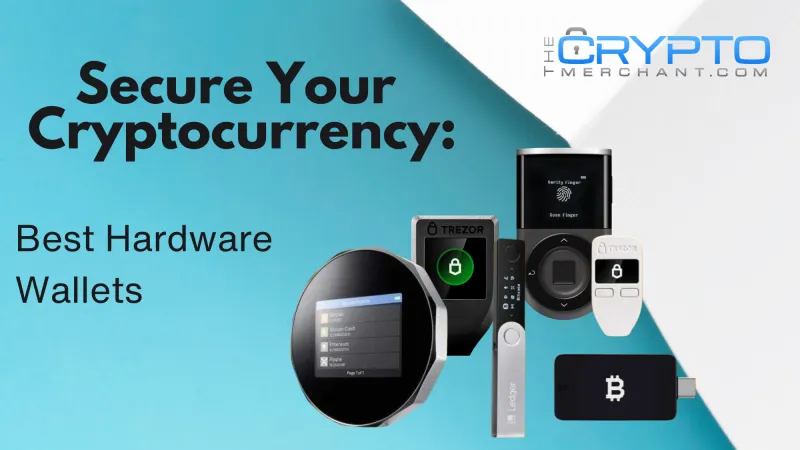
What the evidence does not support is complacency about either option. The regulatory environment is not static, and the platforms that remain accessible today may face additional pressure tomorrow. Privacy-conscious Americans should treat protocol selection as one component of a broader operational security posture — one that includes self-custody, careful transaction hygiene, and ongoing attention to the evolving threat landscape that DeepKraken exists to document and analyze.