Decentralization's Compliance Paradox: How OFAC Sanctions Screening Is Rebuilding the Gates DeFi Promised to Remove
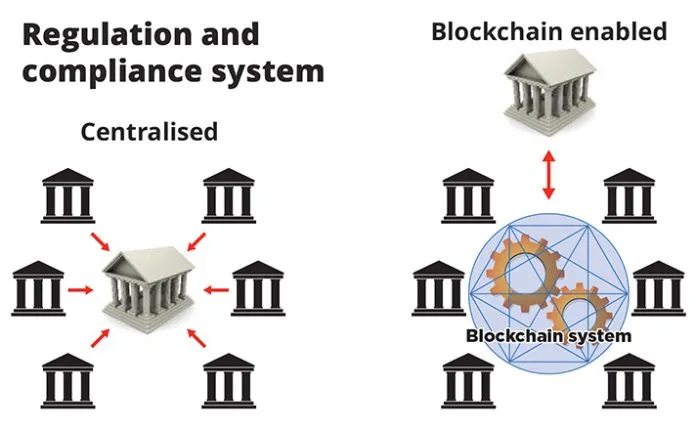
Photo: government regulation blockchain technology compliance surveillance, via www.openaccessgovernment.org
The architecture of decentralized finance was conceived, at its philosophical core, as a system without arbiters. No institution would decide who could participate. No compliance officer would review a wallet address before a transaction cleared. The protocol would execute, indifferently and automatically, according to code alone. That vision is now under sustained and largely quiet assault—not through brute regulatory force, but through the incremental adoption of OFAC compliance tooling that is rewiring DeFi's infrastructure from the inside.
For users navigating the space through privacy-focused channels, the implications are significant and underappreciated.
What OFAC Compliance Actually Demands
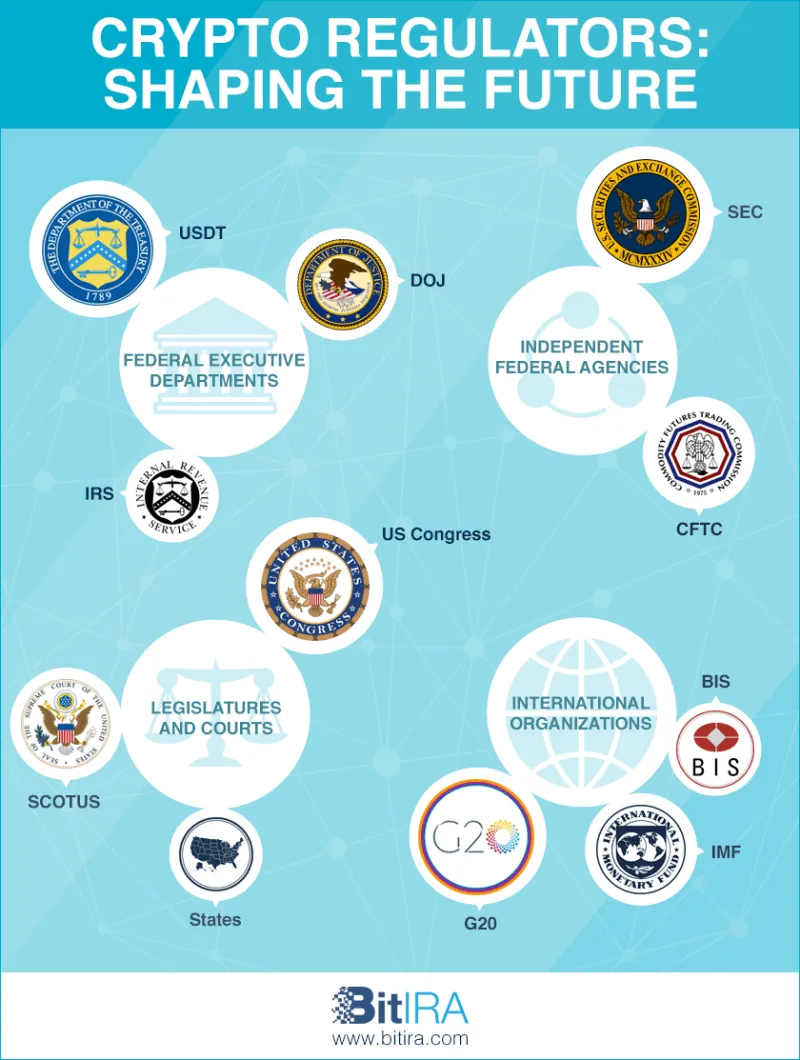
The Office of Foreign Assets Control administers and enforces economic sanctions on behalf of the US Treasury Department. Its Specially Designated Nationals (SDN) list identifies individuals, entities, and—critically, following the Tornado Cash enforcement action of 2022—smart contract addresses that Americans are legally prohibited from transacting with.
For a centralized exchange, compliance is operationally straightforward: screen wallet addresses against the SDN list, block flagged addresses, file Suspicious Activity Reports as required. The mechanism is cumbersome but architecturally compatible with a platform that already controls user access.
For a decentralized protocol, the same requirement creates a structural contradiction. A smart contract that executes permissionlessly by design cannot simultaneously refuse execution based on a government watchlist—not without introducing a control layer that fundamentally compromises its trustless character.
Yet that is precisely what is happening across the ecosystem.
The Compliance Layer Creep
The mechanisms vary, but the pattern is consistent. Protocol front-ends—the web interfaces through which most users interact with DeFi applications—have become the primary compliance chokepoints. Platforms including Uniswap, Aave, and others have implemented wallet screening tools, largely powered by blockchain analytics firms like Chainalysis and TRM Labs, that block flagged addresses from accessing the user interface.
On its surface, this appears to be a narrow technical accommodation. The underlying smart contracts remain accessible; only the front-end is restricted. Sophisticated users can interact directly with contract addresses, bypassing the compliance layer entirely.
But this framing obscures the broader trajectory. As regulatory pressure intensifies, the compliance apparatus is migrating deeper into the stack. Some protocols have introduced governance mechanisms that allow token holders to vote on address blacklisting at the contract level. Others are exploring on-chain identity verification integrations that would require users to attest to jurisdictional compliance before certain functions execute.
Each of these adaptations represents a ratchet. Once implemented, compliance infrastructure is rarely removed. And each layer added makes the protocol more legible—and more controllable—to regulatory authorities.
The Tornado Cash Precedent and Its Aftershocks
The OFAC designation of Tornado Cash smart contract addresses in August 2022 marked a qualitative shift in the regulatory landscape. For the first time, the US government had sanctioned not a person or organization, but autonomous code deployed on a public blockchain. The legal and philosophical implications remain contested, and litigation continues through the federal courts.
What is not contested is the chilling effect. In the months following the designation, numerous DeFi protocols proactively implemented SDN screening, not because they were legally required to do so, but because the reputational and legal risk of appearing non-compliant outweighed the cost of restricting access. This dynamic—voluntary compliance driven by fear of enforcement—is arguably more corrosive to decentralization than direct regulatory mandates would be.
Protocols that have not implemented screening face a different pressure: institutional liquidity providers, venture-backed development teams, and legal counsel are uniformly pushing toward compliance. The economic incentives and liability exposures all point in the same direction.
Technical Workarounds and Their Limitations
The crypto development community has not accepted this trajectory without resistance. Several technical approaches have emerged as potential mitigations.
Zero-knowledge proof systems offer one avenue: rather than revealing wallet history for screening, a user could generate a cryptographic proof demonstrating that their address does not appear on a sanctions list without disclosing the address itself. This approach, while elegant, requires regulatory acceptance of ZK-based compliance attestations—an outcome that remains speculative given current agency postures.
Decentralized front-end delivery through IPFS and similar protocols reduces the leverage that domain-level blocking provides, but does not address smart contract-level compliance mechanisms. And while direct contract interaction remains available to technically proficient users, the normalization of front-end screening conditions the broader user base to expect and accept gatekeeping.
DAO-based governance of compliance decisions distributes the decision-making but does not eliminate it. A protocol whose token holders vote to blacklist addresses is still a protocol with a blacklist.
The Irreconcilability Problem
At the deepest level, the tension between OFAC compliance and genuine decentralization may not be resolvable through technical innovation alone. US sanctions law is premised on the ability to identify and exclude specific actors from financial systems. Decentralized protocols are premised on the impossibility of such exclusion. These are not merely different operational models—they reflect incompatible assumptions about the nature of financial infrastructure.
For American users operating within this landscape, the practical consequence is that the DeFi ecosystem is bifurcating. Protocols seeking institutional legitimacy and regulatory accommodation are converging toward a compliance-compatible model that preserves the aesthetic of decentralization while reintroducing meaningful centralized control. Meanwhile, the protocols that resist this trajectory operate under increasing legal uncertainty and face growing access barriers for US-based participants.
Navigating this bifurcation requires clarity about what one values in decentralized systems—and honesty about the degree to which those values are being preserved in any given protocol. The compliance layer is not always visible. But it is increasingly present.
For those committed to the original premise of trustless, permissionless finance, the regulatory environment demands not complacency but vigilance. The architecture of control, once embedded, is extraordinarily difficult to remove.